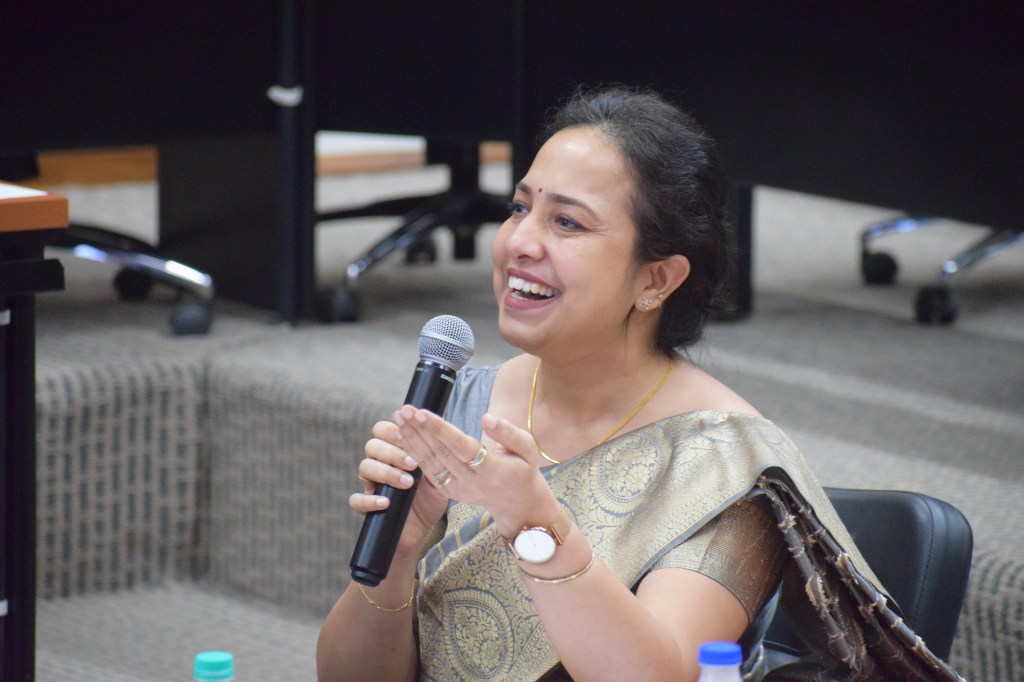
I am a cell and molecular biologist by training (PhD), with postdoctoral experience in the neurobiology of autism using rodent models. Close interactions with clinicians and families of children with autism motivated me to steer my career towards translational neuroscience and public health research. Since 2015, I have developed and validated tools for community detection of neurodevelopmental delays and autism in preschool children. Briefly, I contributed to the design, development and validation of a tablet-based gamified tool (named DEvelopmental Assessment on an E-Platform or DEEP) to assess cognitive abilities in preschool children, and another gamified tool named Screening Tools for Autism Risk using Technology (START) to detect autism risk in early childhood. I collaborated with the STREAM (Scalable TRansdiagnostic Early Assessment of Mental health) team to develop reference standards for cognitive, social, and motor development in 0-6 year old children in India and Malawi. The protocol paper for the STREAM project can be accessed here.
Having contributed to bridging an essential gap in the lack of scalable tools for neurodevelopmental assessments in low-resource settings, I am now interested in examining the determinants of poor cognitive outcomes and their consequences across the life course in children growing up in low-resourced settings. Towards meeting this goal, I am currently coordinating the COINCIDE project funded by the DBT/Wellcome Trust Team Science Grant (2021-2026) that aims to assess the nutritional, psychosocial and environmental determinants of poor neurodevelopment and child mental health across the first decade of life. The COINCIDE study will extend the follow-up of two birth cohorts based in diverse settings of rural North (Rewari, Haryana) and urban South (Bengaluru) India.
Evidence from our research will inform a theory of change (TOC) – an evidence-based theoretical model of the biological, social, cultural and economic origins of differential neurodevelopmental and mental health trajectories in children growing up in low-resource settings. This TOC will help provide a framework to develop multicomponent interventions focused on the first decade of life (Pregnancy-9 years), that is tailored for two geographically and culturally distinct communities in India, by highlighting important intervention targets and their sensitive periods. For the first time, we will generate evidence that enables pushing the boundaries of intervention timelines right up to the beginning of adolescence.
Currently, I am the Lead and Professor-in-Charge of the PHFI Centre for Developmental and Lifecourse Research and Professor, Indian Institute of Public Health-Bengaluru, Public Health Foundation of India

 Debarati mukherjee, phd